POLITICS
CULTURE
ECONOMY
EMBASSY
INVESTMENT
TOURISM
PROFILE OF ANGOLA
NATIONAL PARKS
TRADE


FOREIGN POLICY
EVENTS
LINKS


Endiama Celebrates 25th Anniversary

Luanda, 01/15 - Angola`s National Diamond Company (Endiama-EP), is celebrating on Sunday its 25 years of existence with a conference under the motto "Cutting To Grow".

Customs Storehouse Spends USD 40 Million On Goods

Luanda, 01/16 - Forty million US Dollars will be spent this year by the Customs Storehouse on the purchase of merchandise for sale, Angop learned from the institution`s managing board chairman, Alexandre David de Sousa Costa.

Portuguese Businessmen Analyse Investment In Africa
Lisboa, 05/06 - The investments realised by Portugal in the African Portuguese Speaking Countries (PALOP) during the past 30 years were insufficient to promote the development of those African States,

Electricity Companies On Accords To Integrate PEAC
Luanda, 05/05 - An agreement aiming at formalizing the entrance of the Angolan firms National Company of Energy (ENE) and Luanda`s Electricty Distribution Company (EDEL) in the Pool of Electric Energy for Central Africa will be signed today, in Luanda,

Government Fights For Currency Stabilisation To Revive Economy

Luanda, 05/05 - The Angolan deputy Prime Minister, Aguinaldo Jaime said Wednesday here that the great challenge of his Government, in this context of peace, is the consolidation of macro-economic stability programme and the national currency (Kwanza), in order to turn it into a tool that enables the re-launching of the country`s non-oil sector.

UN Official Considers Opportune World Bank Report
Luanda, 05/04 - The resident co-ordinator of the United Nations in Angola, Pirre Pirlot, considered opportune the release today in Luanda of a World Bank report,

Saving and Credit Bank, World Vision Sign Cooperation Accord

Luanda, 27/04 - A cooperation accord, worth at 1,249,000 UDS to finance agricultural projects in the Central Huambo Province, was signed Tuesday here by the Angola Saving and Credit Bank (BCI) and the World Vision, Angop has learnt.

CULTURE OF ANGOLA
ART
Architecture
Cuisine
DANCE
Literature
Music
TRADITIONAL CERAMICS OF ANGOLA


The cultural origins of Angola are tied to the traditions of the central Bantu peoples and the ancient kingdom of Kongo. Located on the southwestern coast of Africa, Angola became a key colony in the growing Portuguese empire after 1500, but for most of the years of its domination Portugal exerted little cultural influence, content to control the slave trade from forts along the coast. Only after the mid–19th century did Portugal seek control of the entire territory, thus spawning a resistance that inspired much art and literature. Angola’s struggle for independence was long and violent, and life in the independent nation has also been marred by intense civil war. Such disorder has obstructed the development of Bantu customs and also destroyed the more Portuguese traditions of the coastal cities.

The largest ethno linguistic group in Angola has distinct cultural profiles as well as different political loyalties. Most numerous are the Ovimbundu, who are located in the central and southern areas and speak Umbundu. The Mbundu are concentrated in the capital, Luanda, and in the central and northern areas and speak Kimbundu. The Bakongo speak variants of the Kikongo language and also live in the north, spanning the borders with Congo and the Congo Republic. Other important groups include the Lundu, Chokwe, and Nganguela peoples, whose settlements are in the east. A small but important minority of mystic’s (Portuguese – Africans) live in larger cities, especially Luanda. Before 1975, Angola had one of the largest white minorities in Africa, many of whom had never seen Portugal, but most left at the threat of independence.

Portuguese is the country’s official language, and the majority of Angolans are Roman Catholics. There are also smaller numbers of Protestants and peoples who practice traditional religions exclusively, though many Angolans combine some traditional beliefs with their Christianity.

The traditional arts of Angola have played an important part in cultural rituals marking such passages as birth or death, childhood to adulthood, and the harvest and hunting seasons.

In producing masks and other items from bronze, ivory, wood, malachite, or ceramics, each ethno linguistic group has distinct styles. For example, the ritual masks created by the Luanda-Chokwe represent such figures from their mythology as Princess Lweji and Prince Tschibinda-Ilunga. The use of these ceremonial masks is always accompanied with music and storytelling, both of which have developed in important ways.

Angolan’s literary roots in the oral tradition were overlaid during the 19th century with the writings of Portuguese-educated Portuguese-Africans in the cities. Literature helped to focus anti-colonial resistance and played an important role in the independence struggle. Angola’s most famous poet, Antonio Agostinho Neto, was the leader of an important political movement. His works centered on themes of freedom and have been translated into many languages. Post-independence literature, however, has been limited by censorship and ongoing political strife.

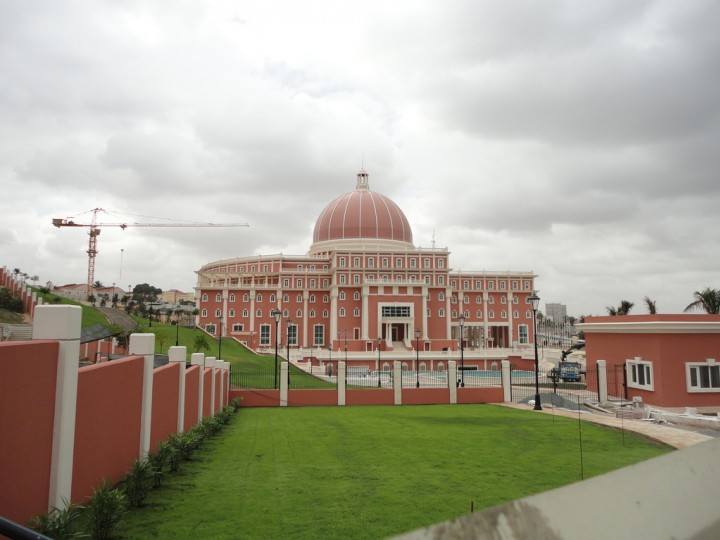
Many buildings in Angola record the cultural contributions of the Portuguese. Some of the earliest landmarks are churches in the far north that served as bases for missionaries to the Kongo kingdom. One fine example of many is the Church of Se in the city of Mbanza Kongo. The later construction of many coastal forts corresponds to the area’s growing slave trade. Fort Sao Miguel in Luanda, built at the turn of the 17th century, is the most famous of these. This massive fort was for many years a self-contained town protected by thick walls encrusted with cannons. The fort served as slave depot, administrative center, and residence for the Portuguese community. The Cathedral of Luanda, completed in 1628, is another impressive monument in the capital. Virtually every coastal city has a set of historic buildings that are broadly similar. The Church of Sao Tiago in the town of Namibe, for example, was built during the 19th century in a style very reminiscent of the 16th century churches in more northern towns.